Okay, so here's what happened at #GetSomeJoy: A Blackstravaganza for Mental Health Awareness
The Wackness Hall of Fame
An Extraordinary Impact: Alice Wong is Bringing Visibility to Disabled Communities
Following in the footsteps of author Olivia A. Cole’s brilliant Women of Wednesday series, our own ongoing “An Extraordinary Impact” features people of color responsible for creating an extraordinary impact within their communities. By providing them with a platform to share their accomplishments, goals, and message, we hope to not only celebrate their achievements, but to galvanize support for their endeavors.
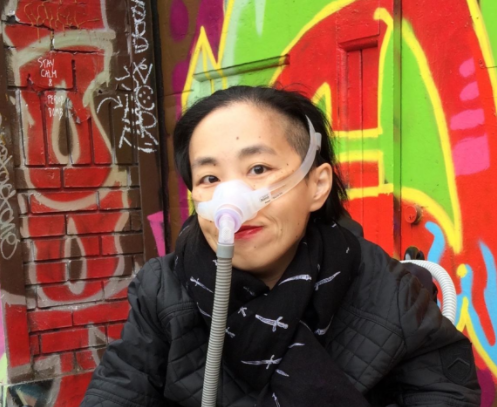
Alice Wong, San Francisco
1. So what is it you’re doing and why are you so passionate about it?
I created the Disability Visibility Project™ (DVP) about three years ago because I didn't see enough stories or histories about disabled people. Like many marginalized groups, much of our history is untold, forgotten, or erased. When stories about disabled people are told in the media or by historians, it's often from a non-disabled lens.
The DVP is a community partnership with StoryCorps, a national oral history non-profit that records the stories of all people, not just the famous and infamous. What's great about StoryCorps is that it's free and participants have the option of having their recording archived at the Library of Congress. Imagine being able to tell your story in your own words and having it preserved for the future. I find that incredibly powerful and exciting.
I interview folks in my San Francisco Bay Area disability community about their lives and what matter to them. I encourage disabled folks around the country to go to a StoryCorps location to record their stories as well. I'm passionate about this project because it gives people an opportunity to share a moment, create something, and add to a larger body of history that is open to the public.
In telling our stories, we're claiming our identities and taking pride as a community--this is the driving force behind what I do.
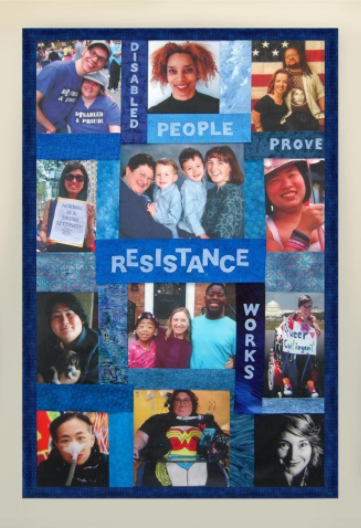
(Quilt by Corbett O'Toole)
2. What made you decide to pursue doing this work?
Originally, the Disability Visibility Project™ was a one-year project. I thought I'd see who I could interview by using my networks on social media. My background is in qualitative research so I always loved interviewing people and learning from them. Pretty soon, the DVP became my life's work and I decided to focus on it full-time a few months ago.
I realized there was a need and hunger for stories by and for disabled people. The positive responses encouraged me to broaden the DVP into an online community. I publish blog posts featuring the interviews from the DVP and use Twitter and Facebook to disseminate them.
Since I enjoy using social media and sharing information, the online component has been equally important as my partnership with StoryCorps. Building online spaces where we can share our stories plus have conversations is an extension of what I've been doing informally as an individual.
I also host Twitter chats and partner with other people who are disabled activists. For example, I am a co-partner in #CripTheVote, a nonpartisan online movement encouraging the political participation of disabled people. I love working with different people in the disability community and collaborating with so many talented and amazing folks.
The work I do now is a culmination of my skills and passions--it's weird how my journey in life has led me to this place! Whenever I think about it, I'm filled with a deep sense of gratitude.
3. Who have been some of your biggest influences and inspirations?
There are a lot of media makers and online communities that influence me. Jamie Broadnax's Black Girl Nerds and Keith Chow's The Nerds of Color are fantastic nerd-driven communities that give me life. I love live tweeting with them and appreciate how they consistently push back against the status quo in entertainment and media.
Many disabled women have mentored and supported me over the years--I try to do the same and amplify the work of disabled writers, artists, and activists, especially disabled people of color. Three particular shout-outs I'd like to give are TL Lewis, Vilissa Thompson, and Keah Brown. If you're on Twitter, follow them! All three are activists and writers who cover issues of race, disability, culture, structural inequality, and intersectionality.
4. What would it take for you to consider this endeavor a success?
I like the current pace and direction of the DVP and in many ways it's already a success. The DVP has over 100 oral histories recorded so far and I'm in the process of putting them online so anyone can access them.
Two DVP oral histories were selected for broadcast on National Public Radio so that's something! Anytime non-stereotypical stories by disabled are out in the mainstream is always a good thing. Here's the most recent one from this past Mother's Day featuring Sarah Churchill and her daughter Yomi Wrong. You can also hear my interview with Yomi from 2015.
Right now this is a one-person production--I'd like the project to grow but I don't want to change based on other people's ideas of what success looks like.

5. How can interested parties support what you’re doing?
Thanks for asking this question. First, folks can go to my website and check it out. Everyone's welcome to join the DVP Facebook group where a lot of conversations happen about disability culture and issues. For people who use Twitter, they can follow me @SFdirewolf and @DisVisibility.
I launched a Patreon campaign a few months ago--if people appreciate my work, they're welcome to support it for $1/month or more. This will allow me to pay disabled people to create authentic media and help get their stories out there.
One final recommendation for your readers is to amplify the work by disabled people, especially stories they love.
Donate on Patreon: https://www.patreon.com/DVP
Website: http://disabilityvisibilityproject.com/
Facebook: https://www.facebook.com/groups/356870067786565/
Are you making “An Extraordinary Impact” on your community and want to be featured in a future installment? Shoot us an email with your answers to the above questions to theextraordinarynegroes@gmail.com.







Mental Health Monday #16: Being attracted to your therapist, Black boy trauma, self-love, etc.

50 Cent, Chris Lighty, and LL Cool J (image by Johnny Nunez/Wire Image)
Oh, hey. Welcome to another round of Mental Health Monday, your weekly dose of stories, resources, and motivation for your everyday life. On the last roundup, we had an update on British R&B singer's journey with depression, a documentary on the mental health of students of color by a Howard University student, mental illness on television, and a NYC psychiatrist that prescribes books rather than pills. Good times. Go have a gander.
If you haven't already, check out Mogul: The Life & Death of Chris Lighty, the new Spotify series about the life and death of the beloved industry executive who took his own life in 2012. It's brought to you by Combat Jack's Reggie Ossé. Find out more about it here.
If you're in New York, come on out and join Alex at the Schomburg Center for Research in Black Culture this Wednesday, May 31 at #GetSomeJoy: A Blackstavaganza for Mental Health Awareness, featuring Hari Ziyad, Jayson P. Smith, Alise Leslie, Andrew Shade, Danielle Belton, and Darnell Lamont Walker. Get tickets and more information here.
THIS WEEK'S GOODNESS
'Mogul': Even In Death, Chris Lighty Takes Hip-Hop To Another Level
Black Boys Coping With The Trauma Of Watching Black People Die by Dr. Marcus Bright [HuffPost]
There is a secret depression that is rooted in economics that many Black men battle. It is hidden underneath an assortment of layers including an exaggerated bravado, drug and alcohol abuse, misdirected anger, and other forms of destructive behavior. Fantastical illusions are also a tool that is deployed to cope with the humbling realities of an often marginalized existence.
Long Beach approves its first 24-hour psychiatric urgent-care center by Courtney Tompkins [Long Beach Press Telegram]
Long Beach has approved the city’s first ’round-the-clock psychiatric urgent care center, a facility advocates say will provide necessary social services and offer an alternative to incarceration or treatment in hospital emergency rooms where waits can be long and beds are often too few.
Stars Behavioral Health Group, headquartered in Long Beach, will run the operation on contract with the Los Angeles County Department of Mental Health, which operates five similar facilities across the county and plans to open four more this year.
We All F*ck Up: The Importance of Loving Yourself Even When You Disappoint Yourself by Vanessa Lewis [The Body Is Not An Apology]
"Look, the act of self love ain’t never been no easy thing — especially when you’re experiencing copious amounts of scarcity, shame, disenfranchisement, or loss. Otherwise, there wouldn’t be a 10 billion dollar skin-lightening industry in countries where the world’s darkest people reside. Forty-two percent of voting women wouldn’t have voted for Donald Trump (an anti-choice, anti-union, anti-poor, pro-war, sexual harassment enthusiast).
And I, processing yet another anguishing break-up with someone who’s made it overtly and painfully clear that they no longer want anything to do with me, would be focusing more on healing, pursuing my goals, and moving through grief, rather than spending my days staring at his Facebook page, miserably pining for his affection and attention, and desperately reaching out to him even when I know better."
You're Attracted to Your Therapist: What Now? by Ruben Castaneda [US News]
What should you do if you’re attracted to your therapist? Suppose you hit it off with him or her and start believing you can be buddies outside the therapeutic setting? Or become overly emotionally dependent on your psychotherapist or psychiatrist?
"I hope something positive will come from dad's suicide" [Lionheart]
There can be nothing more heartbreaking to know that someone you loved was so ill and unhappy that they felt their only option was to take their own life.
But that is what Rob O’Halloran and his sister Lucy must live with: their father John O’Halloran, a successful chartered surveyor and former company MD, took his own life in 2015 after a long struggle with depression.
Demand for youth mental health services is exploding. How universities and business are scrambling to react by David Cribb [The Star]
At age 18, Kimberly could no longer come up with a reason to live.
The Toronto university student locked the door to her parents’ garage, stepped onto a stool in the middle of the room and looped an electrical cord around her neck.
“It’s something I couldn’t explain,” recalls Kimberly, who asked that her last name not be published. “I didn’t understand what was going on in my head . . . You want to give up.”
How to deal with your mental health when the world feels like a scary place [Metro UK]
Having anxiety and obsessive thoughts often boils down to a simple misunderstanding of the level of danger in a situation.
My brain tells me that leaving switches turned on will result in the house burning down, that if I don’t go and check the door seven times before bed I’ll get burgled, and – in the worst times – that if I go outside I’ll get murdered.
Get your tickets HERE to #GetSomeJoy HERE.
Are you a Black mental health professional? Do you know one? Alex is building a hub for Black wellness. Learn how you can be down.
Do you have a mental health-related story, video, event, or other content we should know about? Hit us up.


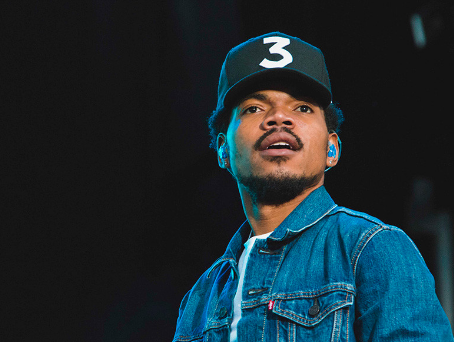





Join us at #GetSomeJoy: A Blackstravaganza for Mental Health Awareness (NYC)

To close out Mental Health Awareness month, Alex is hosting a night of merriment, art, readings by poets and storytellers, and candid conversations to increase awareness and destroy the stigmas around mental and emotional wellness.
When: Wednesday, May 31, 2017. Doors: 7PM. Event: 8:20PM
Where: Schomburg Center for Research in Black Culture (Langston Hughes Auditorium)
515 Malcolm X Blvd (at W 135th St)
At #GetSomeJoy, Alexander will share new writings inspired by his journey with depression and anxiety, and you'll hear greatness from Hari Ziyad, Jayson P. Smith, and Alise Leslie. Then, Darnell Lamont Walker, Danielle Belton, and Andrew Shade will join Alexander to get really real about self-care, therapy, healing, and how our work and mental wellness affect one another. #GetSomeJoy ends with a candid conversation about mental illness, stress, and trauma with a special guest. Oh, and there will be a squad of massage therapists on hand to work some magic and community organizations on hand to provide resources. It's gonna be a beautiful night.
FEATURING READINGS BY:


HARI ZIYAD
Hari Ziyad is an artist, writer and the editor-in-chief of the literary and media publication RaceBaitR. They received their BFA from New York University, where they concentrated on Film and Television and Psychology.
Their work is informed by their passion for storytelling and wrestling with identity as a Black, non-binary child of Muslim and Hindu parents while growing up in Cleveland, OH.
Their work has been featured on Gawker, Out, Ebony, Mic, The Guardian, Colorlines, Paste Magazine, Black Girl Dangerous, The Feminist Wire, and in the peer-reviewed journal Critical Ethnic Studies (upcoming 2017). They are also Deputy Editor for Black Youth Project, an Assistant Editor for Vinyl Poetry & Prose, and writer for AFROPUNK.
ALISE LESLIE
Alise Leslie is a poet, author, blogger, spoken-word artist, and mental health advocate currently residing in Durham, NC. She writes at the blog, “In My Mental Mind: a black girl’s mental health journey," focusing on mental health issues, particularly for women and men of color, through essays, personal stories, poetry, and music. Her lipstick game is most likely better than yours.
More Alise: In My Mental Mind | Facebook | Twitter
JAYSON P. SMITH
Jayson P. Smith is a writer, curator, & educator. Currently an Emerge-Surface-Be Fellow with The Poetry Project, Jayson lives/works in Brooklyn & at jaysonpsmith.com, where they curate & host the NOMAD Reading Series.
DISCUSSION: "SELF-CARE, THERAPY, AND WELLNESS FOR BLACK FOLKS" WITH:
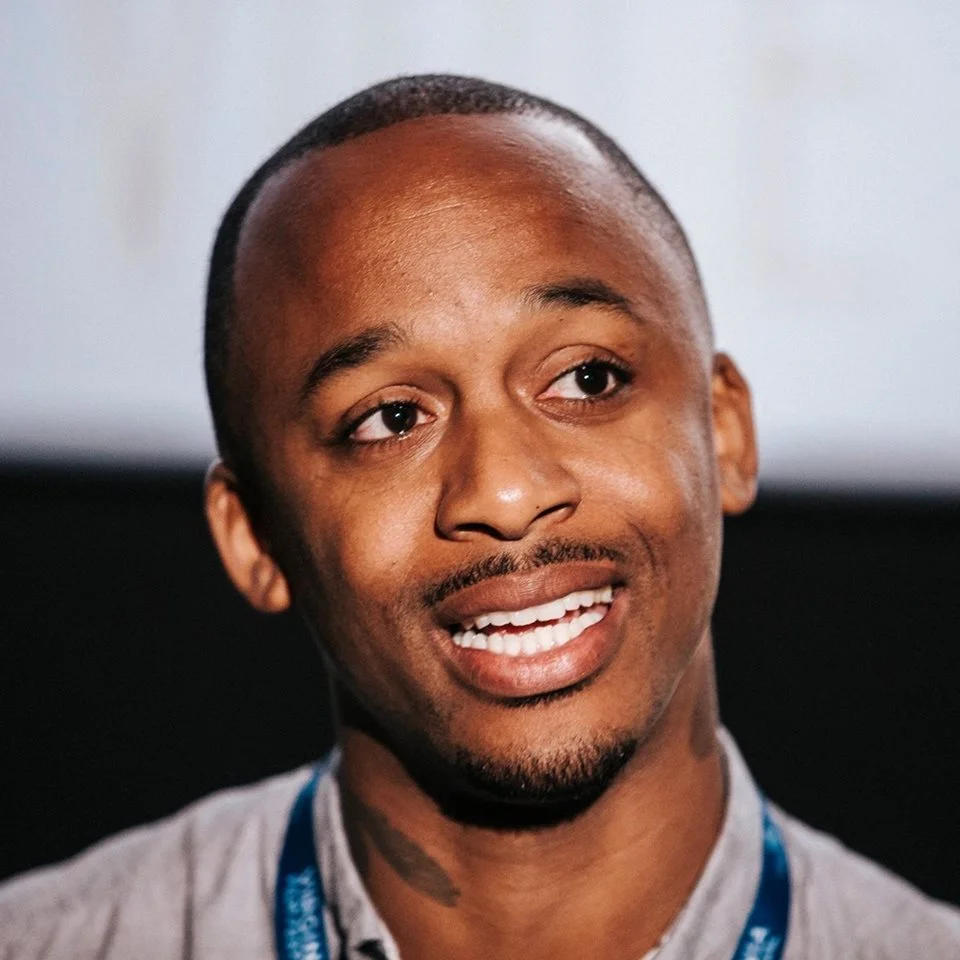


DARNELL LAMONT WALKER
Darnell Lamont Walker, above all things, is an artist. As a writer, photographer, painter, and filmmaker, Darnell understands his duty is to reflect the times, whatever that may mean for the space he’s occupying.
As a playwright, Darnell has produced several plays, winning numerous awards worldwide, including three Best Drama Awards. As a poet, he serves as a Calalloo fellow, and tours the world, sharing his work. As an author, Darnell has published 5 works.
As a photographer, Darnell has been invited to exhibit his work in many galleries and spaces around the United States, Spain, South Africa, and the UK. He’s also been published to Vogue Italia.
Seeking Asylum, Darnell’s first self-produced and directed documentary, has been screened worldwide in several festivals and film houses. The film explored Black Americans’ desires to escape American tyranny for safer lands. His latest work, Outside The House, puts Black mental health on the forefront, asking “why are we not seeking the help we should be?”
Currently living in a “self-imposed exile” in South Africa, Darnell continues to create are that forces conversation and reflection.
ANDREW SHADE
Andrew Shade has a burning passion that lies in the arts. Originally from Fort Wayne, IN, he resides in the heart of Harlem, helping to lead the way in building a more diverse and knowledgeable audience in the theatre world. He is the Founder & Editorial Director of Broadway Black, a digital platform dedicated to highlighting the achievements and successes of African-American theatre artists on and off the Broadway stage. Broadway Black has taken the theatre industry by storm and has been excelled by the likes of Ben Vereen, Jennifer Hudson, & Misty Copeland just to name a few.
However, Shade feels the greatest achievement has been using his experience and knowledge of the industry to create a community celebrating his own. Recently awarded The Mountaintop Award by Actors Equity Association & BOLDNYC for being a trailblazer. "There is no greater joy than fueling & inspiring those who once thought the theatre was a foreign place to which they were not welcome," he says. He lives the life of the Broadway Black slogan, and shows what can happen "When The Theatre Goes Dark."
DANIELLE BELTON
Born and raised in St. Louis, Mo. on a healthy diet of news programming, pop culture, black history and “snark,” Danielle Belton, daughter of loving “regular folk” and wife of no one, examines the irreverent side of American life.
With two million readers in less than two years, Belton is best known as the editor/writer of the pop culture-meets-politics blog The Black Snob. Belton started the blog in 2007.
Belton is currently Associate Editor for The Root. Previously she was Editor-At-Large for Clutch Magazine Online, and was recently head writer for the late night television show Don’t Sleep hosted by T. J. Holmes on BET.
As an advocate for mental illness, Belton also has blogged about Bipolar Disorder for BP Magazine’s online site. She penned her own profile in BP Magazine summer 2011 and wrote about her battle with mental illness for the January 2012 edition of Essence Magazine.
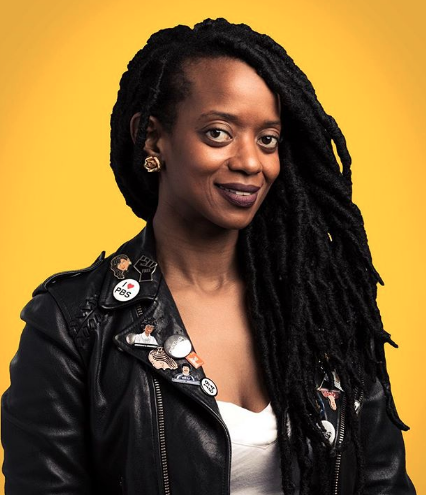
The Black Snob has earned critical acclaim, appearing in Time Magazine, The New York Times, The Observer (UK), The Daily Beast, Essence Magazine, The Associated Press, The American Prospect, as well as appearing on CNN, MSNBC, NPR, PBS, Good Morning America, HLN, ABC’s Nightline and Al Jazeera English.
GET YOUR GOLDEN TICKET HERE.
If you have a company or brand and would like to discuss getting in front of a diverse audience of creatives, mental health professionals, and community members and connecting with over 150,000 combined social media subscribers (between the host, The Extraordinary Negreos, and event participants) in an engaging way, contact us here or at mr.alexhardy@gmail.com.
CURRENT SPONSORS:

PAST SPONSORS:




ABOUT YOUR HOST:

New York City-based food-lover Alexander Hardy is an essayist, mental health advocate, cultural critic, dancer, lupus survivor, and co-host of The Extraordinary Negroes podcast. He has written for Ebony Magazine, CNN.com, Esquire, Gawker, Courvoisier, The Huffington Post, Saint Heron, and Very Smart Brothas, among other outlets. Before shifting his creative and professional focus to mental health, he founded and worked as director of Panamerican Languages and taught dance and CardioDance classes while living and working in Panama City, Panama. Alexander now teaches creative, essay, and academic writing and spreads awareness as a certified Mental Health First Aid Instructor. When not writing on TheColoredBoy.com or talking about self-care or Janet Jackson, he enjoys cheese grits, power naps, James Baldwin, and rice. Alexander does not believe in snow or Delaware. View Alex's mental health writing and work here. See all of his work here.
Mental Health Monday #15: Laura Mvula's anxiety journey, dementia in NFL players, books as therapy, etc.

Laura Mvula, singer, mental health advocate
Oh, hey. Welcome to another round of Mental Health Monday, your weekly dose of stories, resources, and motivation for your everyday life. On last week's roundup, we featured a new VICELAND series that takes some of your favorite artists to therapy, reflections by Naomi Campbell on the discrimination she received when she sought help with drug abuse challenges, thoughts on how mental health is depicted in the media, and so forth. Have a gander.
If you're in New York, come on out and join Alex at the Schomburg Center for Research in Black Culture on Wednesday, May 31 at #GetSomeJoy: A Blackstavaganza for Mental Health Awareness, featuring Hari Ziyad, Jayson P. Smith, Alise Leslie, Andrew Shade, Danielle Belton, and Darnell Lamont Walker. Get tickets and more information here.
AND: Join us on The Extraordinary Negroes Facebook page for Mental Health Monday, live tonight at 9PM EST. Check out our first
THIS WEEK'S GOODNESS
"This Singer Just Made An Excellent Point About Mental Health Progress" by Kimberly Truong [Refinery29]
If you've ever suffered from anxiety, you'll know how common and easy it can be to get wrapped up in an overwhelming amount of stress over certain things. Anxiety is complex and manifests in many different ways for different people, but it can often involve being unable to put aside a feeling of worry that's triggered by certain situations.
For British singer Laura Mvula, her anxiety disorder is especially high when she's left alone.
"This anxiety thing is something that has dictated my life," she told The Guardian last year.
But now, Mvula is working steadily towards recovery and shared a powerful message about mental health progress on her Instagram. On Wednesday, the singer posted a photo of a London Underground tube station, explaining that she's overcoming her anxieties over traveling alone on the train.
And then Howard student Gabrielle Headly edited and directed documentary on students of color who struggle with their mental health.
"Mental Health Treatment Can Save Lives, But The Right Diagnosis Can Take Years" By Lindsay Holmes,Damon Dahlen,Isabella Carapella [HuffPost]
1,277 days. That’s approximately how long it took Nic Newling to figure out he was dealing with bipolar disorder after first reaching out for help.
"Black Folks and Mental Health: Why Do We Suffer in Silence" by Nia Hamm [HuffPost]
With the exception of African American celebrities or public figures who experience mental trauma, such as Illinois Representative Jesse Jackson Jr., or commit suicide as in the death of hip-hop legend Chris Lighty, mental health remains largely absent from the public discourse in the Black community.
But the statistics are loud and clear. African Americans are 20% more likely to report having serious psychological distress than non-Hispanic Whites, according to the U.S. Department of Health and Human Services Office of Minority Services. Yet young adult African Americans, especially those with higher levels of education, are less likely to seek mental health services than their White counterparts, according to a study published by the American Psychological Association.
"Removing the Stigma Surrounding Mental Health in Blacks" by Elisha Lowe RN, BSN, MBA [Black Enterprise]
“You can be sad today, and tomorrow too. And then you can be happy on Thursday, happy on Friday and then find yourself anxious on Saturday…it’s all OK because life is a journey and there’s no way we can all stay on the same path every single day of our lives forever. So that’s what I want this campaign to do, I want this campaign to highlight the various highs and lows of just being a human and understand that it’s OK either way.”
"Some black college students face hidden mental health crisis" by Beth Galvin [FOX 5 Atlanta]
When Ashanti Hampton of Stone Mountain graduated a year early from her racially-diverse DeKalb County high school -- with a 4.2 average -- Georgia Tech seemed like a perfect fit. Instead, she felt isolated, unable to connect.
"It's very hard. Engineering is hard in itself. But being alone in engineering, and struggling alone, and struggling silently, is even harder," says Hampton. "To be honest, I dealt with a lot of depression here. "
"You definitely have to prove you belong here, a lot," adds Seyi Gvadeagesin a third-year computer engineering student, born in Nigeria, and raised in North Carolina, says he, too, has struggled.

Image by Daniel Fishel (Thrillist)
"This NYC Therapist Is Prescribing Novels Instead of Pills" by Eliza Dumais [Thrillist]
NYC’s resident bibliotherapist, Noreen Tomassi (who doesn’t have a medical degree, but does have a bachelor’s degree in philosophy) serves as executive director at the Center for Fiction on East 47th St. The Center itself -- a gathering-grounds for die-hard lovers of fiction -- offers public speaker series, writing workshops, book groups, and a collection of elegant sky-lit reading rooms. It’s something of a sacred literary alcove, designed to shelter readers and writers from the outside thrum of New York. “How anyone who rides the NYC subway system five days a week manages to stay sane is a mystery,” Tomassi says. “In this beautiful, nasty, vibrant, and difficult city, people need oases for reflection.”
"The Mental Health Conversation We're Not Having Around Police Violence" by Rochaun Meadows-Fernandez [HuffPost]
But in the case of Edwards’ death, mentioning PTSD is exceptionally ironic: Continued cycles of police violence are often a source of trauma and can trigger pre-existing PTSD in the black community, an under-addressed problem according to experts.
In fact, a growing body of evidence suggests that black Americans may experience a specific type of PTSD, called race-based traumatic stress that is induced by repeatedly witnessing traumatic instances in person and via social media.
'I wouldn't have played': Dementia-stricken NFL great Nick Buoniconti says league officials are 'waiting for players to die' by Cheyenne Roundtree [Daily Mail]
The 76-year-old former middle linebacker for the Patriots and Dolphins was diagnosed with dementia in October 2016.
His illness means he can no longer tie his own shoelaces or dry himself after a shower.
Buoniconti is one of his many teammates suffering from brain disorders that they claim are due to football.
"The Inaccurate Portrayal of Mental Health in Television" by Kalia Richardson [The Panther]
"The major issue revolving around this exploitation remains the poor portrayal of mental illness. Some critics see the message in “13 Reasons Why” as glorifying the concept of suicide, through the accounts of its protagonist Hannah, an ignored and bullied teen.
Oftentimes, those diagnosed with the disorder appear as monsters, as seen in “Split,” when in reality they are normal people who may unfortunately struggle with the basic procedures of life. These so-called creatures are normal human beings seeking help."
"How The AHCA Could Scare Teens From Getting The Help They Need" by Elizabeth Strassner [Bustle]
One of the most widely discussed aspects of the AHCA could also be one of the most damaging for teens seeking help for mental illness: the possibility that insurers could once again charge higher rates due to pre-existing conditions, if coverage has been lapsed for more than 63 days. Pre-existing conditions include things like epilepsy and cancer but also include mental illnesses common among teens, like depression, anxiety, and substance abuse.
Strobach worries that this pre-existing condition concern might make parents less likely to seek support and resources for their struggling teens. "You might see some real hesitancy on behalf of people seeking out treatment they really need, because they’re afraid that... it will cause their premiums to skyrocket and they won’t be able to afford it," she says.
"Mental Health Conditions" [National Alliance On Mental Illness]
One in 5 adults experiences a mental health condition every year. One in 17 lives with a serious mental illness such as schizophrenia or bipolar disorder. In addition to a person's directly experiencing a mental illness, family, friends and communities are also affected.
Half of mental health conditions begin by age 14, and 75% of mental health conditions develop by age 24. The normal personality and behavior changes of adolescence may mimic or mask symptoms of a mental health condition. Early engagement and support are crucial to improving outcomes and increasing the promise of recovery.

Get your tickets HERE.
Are you a Black mental health professional? Do you know one? Alex is building a hub for Black wellness. Learn how you can be down.
Do you have a mental health-related story, video, event, or other content we should know about? Hit us up.






Mental Health Monday #14: Naomi Campbell's shame, mental illness in the media, healing after violence, etc.

And hello. Welcome to another round of Mental Health Monday, your weekly dose of stories, resources, and motivation for your everyday life. Last week, there was a candid interview with Kelly Rowland about losing her mom a few weeks after her son was born, a story about grief's effect on mental illness, one perspective on what can happen when military veterans struggling with PTSD become police officers, and much mo'. Check it out.
Also last week: Alex hopped on Facebook Live to talk about the Mental Health First Aid instructor's course he recently completed, our Mental Health Monday content and other upcoming goodness, and his upcoming mental health awareness event at the Schomburg Center in Harlem. Here is part one and here is part two.
THIS WEEK'S GOODNESS:
Entrepreneur Sangu Delle knows firsthand the toll ignoring your mental wellness can take on your body and your life. In the above talk, the TED Fellow opened up about how he overcome shame, came to his senses and got serious about his mental and emotional health.
"Naomi Campbell Speaks On Being Shamed for Seeking Drug Abuse Help" by Yakira Young [BET]
"People tried to shame me about the fact that I went to get help. You should never feel shame because recovery is a positive thing. But when I first went, people were not open about this stuff."
"How to Stay Sane if Trump is Driving You Insane: Advice From a Therapist" by Robin Chancer [Medium]
"Acknowledge that greed and racism are part of our nation’s fabric. We cannot wish them away. We cannot choose blindness disguised as positive bias; giving Republican politicians the “benefit of the doubt” has allowed them to get away with murder. Expect to find white rage in any discussion about immigration or discrimination, for example. Anticipating it will help us stay calm and focused. Once we accept that, we sharpen our focus to guard against their insidious infections. We focus on the work of fighting for human rights and accountability."
"Negative Emotions Are Key to Well-Being" by Tori Rodriguez [Scientific American]
"A crucial goal of therapy is to learn to acknowledge and express a full range of emotions, and here was a client apologizing for doing just that. In my psychotherapy practice, many of my clients struggle with highly distressing emotions, such as extreme anger, or with suicidal thoughts. In recent years I have noticed an increase in the number of people who also feel guilty or ashamed about what they perceive to be negativity. Such reactions undoubtedly stem from our culture's overriding bias toward positive thinking. Although positive emotions are worth cultivating, problems arise when people start believing they must be upbeat all the time."
"VICELAND premieres The Therapist" [Shadow and Act]
In the series, Dr. Siri will conduct therapeutic sessions with celebrities in the field of rap, rock, pop, dancehall and EDM. Celebrities in season one of "The Therapist" will be Hip Hop Artists Freddie Gibbs, Waka Flocka Flame, Young M.A., Dej Loaf, D.R.A.M., O.T. Genasis, and rapper/actor Joey Bada$$; also rock musicians Corey Taylor of Slipknot, Wavves’ Nathan Williams, and Damien Abraham will join the roster.
"5 Supplements to Take For Mental Health" by Erin Magner [Well and Good]
"In her practice, Dr. Bergman—who relies on a mix of Eastern and Western medicine—routinely starts off by checking patients’ nutrient levels, because even super healthy eaters can have serious deficiencies. (That’s partly because “bioavailability,” i.e., the body’s ability to absorb nutrients, is a surprisingly complex thing.)
The good news? Once patients start supplementing strategically, most deficiencies can be corrected in a matter of months, Dr. Bergman says—even days. "
"How do you safely depict self-harm, suicide and mental health problems in the mainstream media?" by Oliver Lunn [VICE]
"It's a hot-button issue, the depiction of depression, self-harm and -- most importantly -- suicide. Last year we asked the question, can you direct depression on screen? It's tricky, in short, with more questions than answers. How does the mainstream media depict mental health? What's a responsible depiction? What's an irresponsible depiction? How do people who struggle with these things -- the most important people in this debate -- view such depictions? And what sort of impact can the depictions have on them?"
"A New Approach To Helping Men Of Color Heal After A Violent Incident" by Nick Chiles [NPR]
"Kirby said when his team is working with young men, the discussions often revolve around the question of how they define masculinity, which can get in the way of the healing process.
"Think about the messages they're getting from a young age. When you're learning how to walk and you fall, and you look like you're going to cry, most likely you hear from the people around you, 'Boy, don't cry. Get up, don't cry,'" Kirby said."
"Suicides Prompt Medical Schools to Finally Address Student Mental Health" by David Gorn [KQED]
"A Keck student, 25-year-old Sean Petro, had failed to show up for a clinical rotation. Eventually, campus police found his body in a closet of his apartment, where he had hung himself. In addition to attending medical school, Petro had just become an officer in the Navy Reserve, and had hopes of becoming a flight surgeon.
At Keck, he was just one year shy of graduating."
Are you a Black mental health professional? Do you know one? Alex is building a hub for Black wellness. Learn how you can be down.
Do you have a mental health-related story, video, event, or other content we should know about? Hit us up.